.jpg)
Your technology transformation project is six months behind. The conversion is larger and more complex than you expected; internal teams are stretched thin, and leadership is asking how things went wrong. Suddenly, you’re scrambling to bring in external help to stabilize the situation.
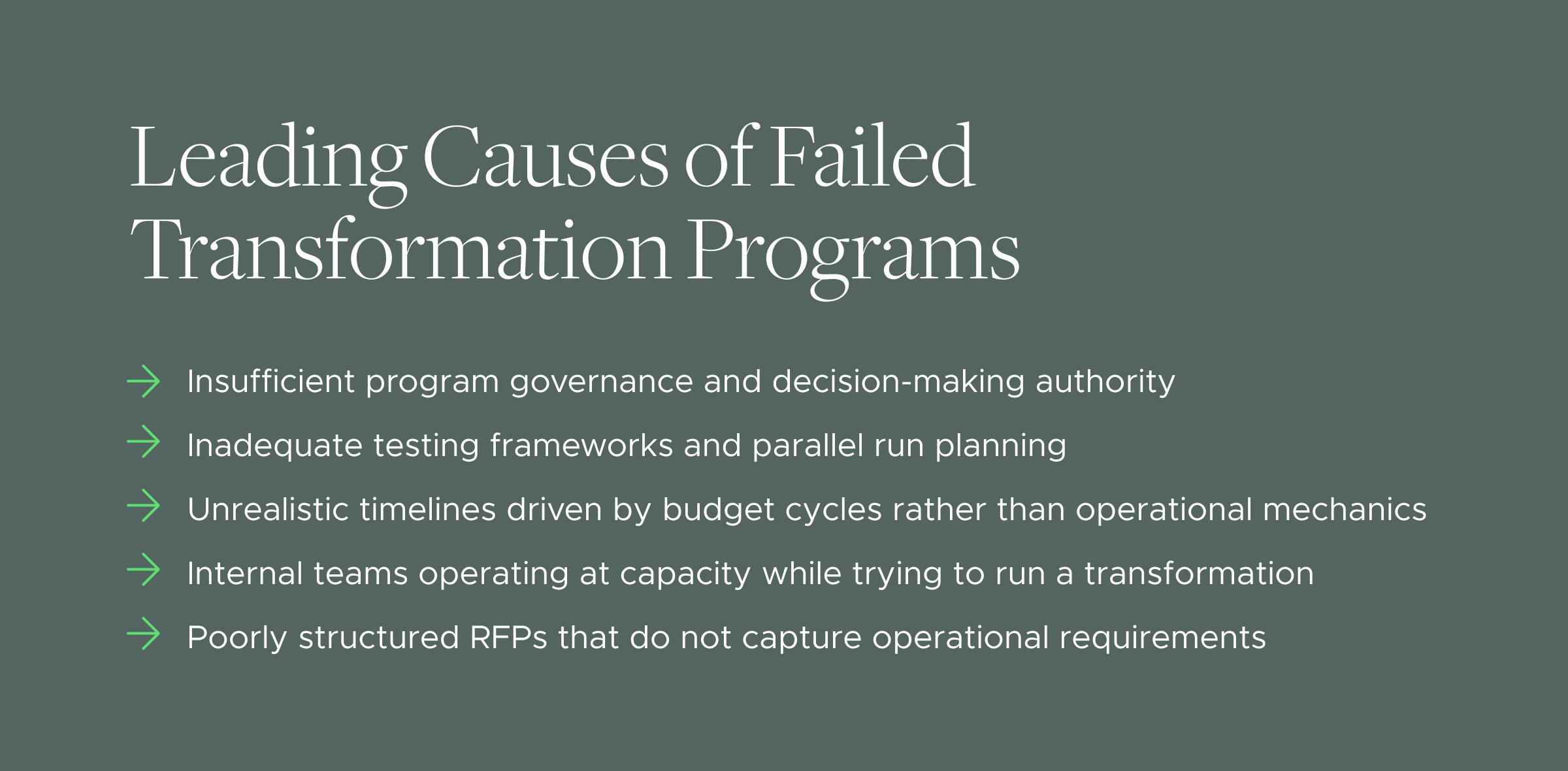
This scenario is common across asset managers and service providers. Large-scale technology and operating model transformations are among the most complex initiatives an investment organization can undertake. These programs typically span dozens of workstreams across operations, technology, tax, legal, distribution, product, and vendor management. Yet despite the scale and importance of these initiatives, many programs struggle to deliver their intended outcomes.
Transformation projects rarely fail because of bad intentions. Rather, they fail because governance, planning, and operating model design were never properly structured from the start. The root causes are consistent: firms underestimate the operational complexity of platform conversions, internal teams juggle transformation work with full-time responsibilities, vendor selection prioritizes technology over operating model fit, and programs often begin before the target operating model and data strategy are defined.
Can asset managers fix or avoid these issues? Yes. Working with experienced transformation specialists who apply disciplined, end-to-end methodology can reset broken projects and even better, engaging them early can prevent delays and misalignment with strategic goals.
An 8-Step Framework and Associated Deliverables for Technology Transformation Success
Transformation specialists follow a disciplined structure that addresses the unique challenges of each step of the process and ensures continued alignment of leadership, project goals, and actions. The following list will guide you through this process and highlight the deliverables that would go with each step.
- Articulate the Strategic Rationale – Define why the transformation is being undertaken. Without this step, scope creep and misaligned expectations are inevitable. The usual rationale includes goals such as cost reduction, platform consolidation, meeting regulatory obligations, increasing scalability, product expansion, and reducing risks associated with legacy technology.
Deliverables: Executive-aligned Transformation Charter and defined success metrics (cost, risk, scalability, timeline)
- Establish Governance and Accountability – Create formal decision-making and escalation structures so the program can move quickly when challenges arise. Successful transformations require clear ownership, defined decision rights, and active engagement from senior leadership. Senior management should make timely decisions when trade-offs arise around scope, cost, or timelines. Without that commitment, projects stall. Also include subject matter experts (SMEs) with real operational knowledge of the business. They can evaluate vendor capabilities, resolve design questions, and prevent unrealistic assumptions from entering the program.
Deliverables: Governance framework, RACI matrix, and escalation protocols
- Define the Target Operating Model (TOM) and Conduct Current-State Assessment – Design the future-state model before selecting systems or vendors. This includes workflow design, control frameworks, data architecture, reporting structures, and decisions about outsourcing or insourcing key functions. Moving directly into implementation may appear to accelerate timelines, but it often creates rework and delays later in the project. Take time to step back and define the operating model early to allow the program to move faster during execution.
Deliverables: Detailed TOM document, process maps (current vs. future state), and gap analysis, Current state heatmap, risk register, and transformation impact assessment
- Develop the Transformation Roadmap – Create a sequenced, realistic implementation plan that will help you avoid reactive planning later. Key elements include phasing strategy (by fund type, geography, product line), critical path analysis, resource plan, budget, parallel run requirements, and testing cycles.
Deliverables: Detailed program plan and milestone schedule
- Create and Execute a Strategic RFP (dependent on transformation type) – If the transformation involves selecting a new platform or service provider, the RFP should translate the target operating model into detailed operational requirements. Evaluate vendors not only on technology capabilities as well as operating model compatibility, implementation experience, and resource depth.
Deliverables: Structured RFP, scoring matrix, and vendor risk assessment
- Conversion Planning, Data Strategy, and Comprehensive Testing Strategy – As implementation approaches, establish a rigorous conversion plan supported by a clearly defined data strategy and testing framework. Testing should simulate real operational conditions, including transaction volume, exception handling, and reporting requirements. Without disciplined testing frameworks, you significantly increase the risk of operational disruptions at conversion.
Deliverables: Conversion playbook, data mapping documents, and parallel run framework formal test plan, entry/exit criteria, and effect tracking framework
- Program Leadership, Culture, and Organizational Alignment – Technology transformation is ultimately an organizational transformation. When systems change, so do roles, processes, controls, and accountability structures. Leaders must actively manage culture and alignment while promoting a collaborative, solutions-oriented “can do” mindset that keeps teams focused on progress. Leaders must also monitor the temperature of the project. Friction between teams, slow decisions, or team fatigue can quietly slow momentum. Persistent blockers such as chronic indecision, misaligned incentives, or individuals who delay decisions should be addressed quickly before they stall progress across teams. Strong programs empower SMEs to make informed decisions, maintain disciplined governance, and ensure senior leadership stays engaged when critical decisions arise.
Deliverables: Change impact assessment, communication plan, and training materials
- Go-Live Governance and Post-Implementation Stabilization – Transformation doesn’t end at conversion. Once you convert, you enter the “hyper care period” which should include daily governance calls, exception monitoring, root cause analysis framework, and KPI tracking against original success metrics. Most firms under-resource stabilization and pay for it later.
Deliverables: Post-implementation review and benefits realization assessment
Tangible Outcomes
Organizations that follow a structured transformation framework experience tangible outcomes such as more predictable timelines, lower operational risk, and stronger cost control. They benefit from improved data integrity, scalable operating models, stronger vendor partnerships, and increased executive confidence in the program’s progress. These organizations also build internal capabilities that support future product innovation, regulatory readiness, and operational resilience.
Transformation Projects’ Best Way Forward
Large-scale platform transformations are among the most complex initiatives an asset manager can undertake. Programs that begin without a defined destination, weak governance, or fragmented expertise, commonly encounter delays and cost overruns. A structured framework combined with experienced transformation leadership ensures that these programs deliver the operational scalability, data integrity, and strategic flexibility firms seek.
Contact Us to Get Started on Your Next Transformation Project
Sign up to get industry insights delivered directly to your inbox