There’s a lot of attention in wealth management on alternative assets. In fact, in its State of Alternative Investments in Wealth Management 2025, Mercer reports 92% of advisors are incorporating alternative investments in their clients’ portfolios. Alternative asset management institutions—private credit, private equity, hedge funds, and others—need to be prepared to operationally handle the demand.
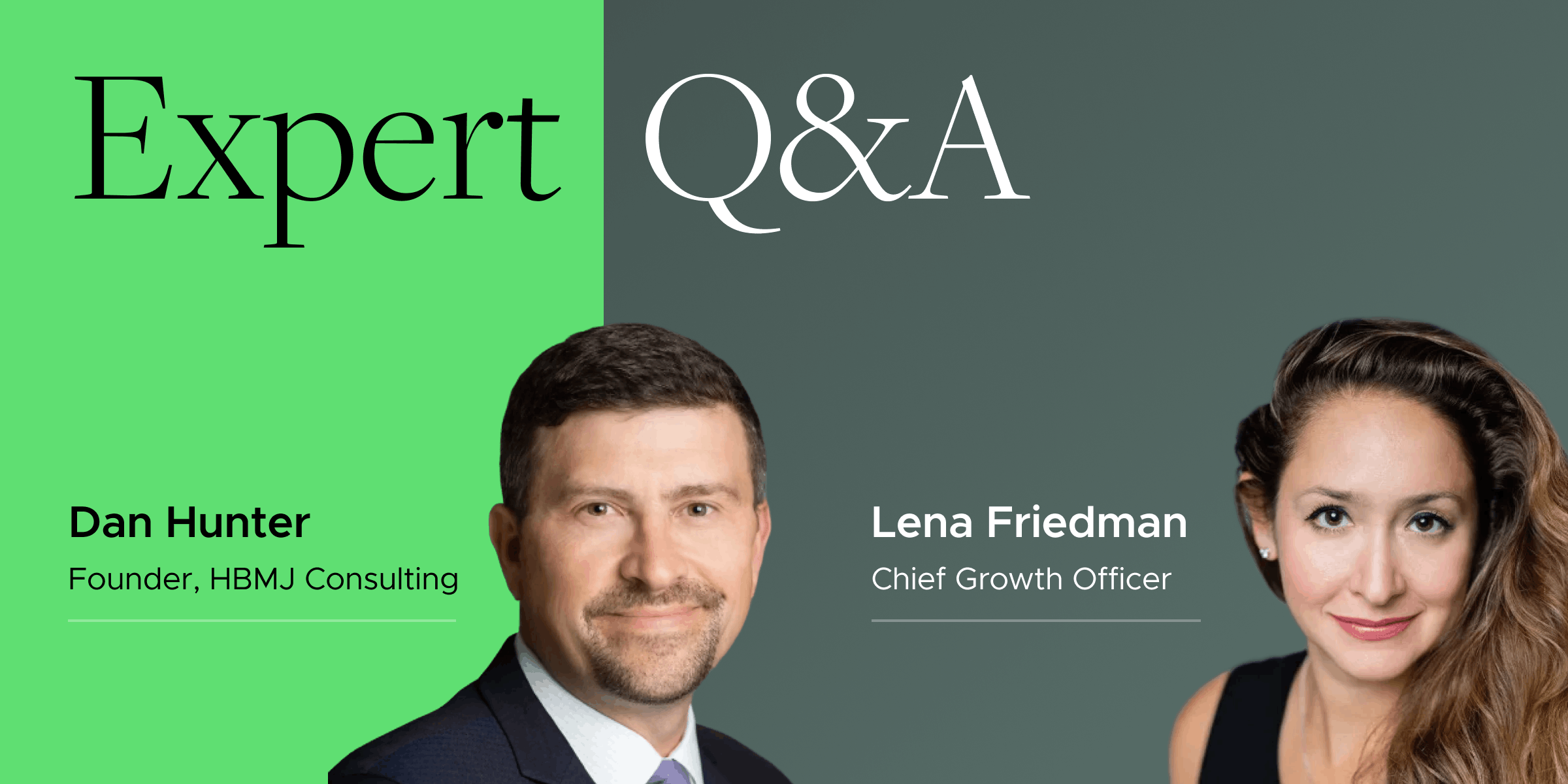
HBMJ Consulting, an F2 Strategy company, is a wholly-owned subsidiary of F2 Strategy. It supports alternative asset institutions in their middle and back office technology transformations. We recently sat down with Dan Hunter, founder and Lena Friedman, chief growth officer for a discussion around the state of technology in alternative asset management and what firms need to do to meet their current and future growth goals.
Q: Let’s set the stage. Tell me about the current state of alts and where they are headed.
LF: Right now in the alternatives space, assets are scaling and strategies are becoming more complex—but the operating infrastructure underneath them isn’t keeping pace. Even so-called best-in-class platforms struggle because data is fragmented, integrations are brittle, and operating models are still built for traditional business models.
That’s why institutionalization has become critical. Firms need to move away from manual workarounds, shadow processes, spreadsheet-driven workflows, and legacy infrastructure, and toward operating models that are scalable, repeatable, and resilient.
We often describe this as the “illusion of scale.” Firms see assets growing, strategies expanding, and investors satisfied—and assume the organization is scaling successfully. But in reality, many are operating like a balloon: stretched thin, increasingly fragile, and approaching a point where growth becomes constrained unless the middle and back office becomes more flexible and institutional-grade.
DH: Asset managers in the hedge fund space have historically had a pretty material amount of manual workarounds—particularly in the middle and back office where they didn't necessarily make most of their technology investment. When technology investment is contained primarily to the front office, the middle and back office don’t quite catch up and stay as effective as they should. And when Lena talks about institutionalization, it’s growing up as a firm. Things that worked for you when you were a 40 person firm don't necessarily work if you're a 200 person firm where you need standardized processes, better documentation, and better systems that can help you unravel all the things that you're trying to execute.
That kind of evolution is really what we're seeing in the marketplace and where companies are saying, “what can I do from a technology standpoint and and what investments can I make so that my middle and back office is ready to support our firm as we change trading strategies, trade new vehicles or raise new money, and want to go to public markets?” All the current macro trends in our space start with having the backbone and infrastructure to make that all happen.
Q: HBMJ focuses on middle and back-office operations and technology. What does that include and why are investments in operations and technology so important to firms?
LF: We work across the full middle- and back-office ecosystem, with a core specialization in portfolio accounting and partnership accounting platforms—whether that’s implementing new systems, upgrading or migrating legacy platforms, or integrating them into a broader operating architecture.
From there, we integrate those core accounting systems with the surrounding source systems—data management and enterprise data platforms, risk and reporting tools, and asset-specific systems such as bank loan and private credit platforms—so data flows cleanly and consistently across the firm.
DH: Additionally, we support the front office from the reporting end. We do custom development around automation, workflow optimization, and reporting. Once a firm has the right systems, we can help them get the data and reporting they need out of them.
Q: What are the front office benefits of investing in middle and back office technology?
DH: The front office, the investor relations, and the fundraising can be the best in the world, and if it doesn't have the appropriate ability to have a world-class middle and back office, the firm will run into tremendous problems, because you're trying to trade assets you just can't process correctly. At that point, historically, asset managing firms have encountered difficult periods up to and including failure. I’ve seen more than one failure caused by middle and back office problems.
Improving your middle and back office means you can support additional fundraising, additional assets, and additional vehicles you want to create…and you're ready to handle any type of compliance or regulatory change that may come. Particularly in the private credit, private equity, and even hedge funds, opening up to the public markets is huge, but you can't have any of that without world-class middle and back office processing correctly. So the investment in middle and back office technology and the institutionalization of those areas if done well allows these other elements of your business to succeed.
Q: What are the biggest benefits technology consultants can provide to alternative asset institutions?
LF: Experience, expertise, and true partnership. These platforms are deeply complex, and firms need advisors who understand not just the technology, but how it operates in the real world of alternative asset management. Our team has sat in the same seats as our clients—coming from leading hedge funds, private credit managers, and fund administrators—so we understand both the technical and operational realities they face. We specialize around accounting-centric operating models, which means we’re often brought in when the stakes are highest and precision matters most.
And, one of our key differentiators is our methodical approach. Dan has built a culture around trusted partnerships—we take the time to deeply assess each engagement before execution, rather than rushing into point solutions that don’t scale. This isn’t a static business. As our clients evolve—launching new strategies, entering new markets, or facing new regulatory demands—we stay alongside them as long-term partners, not just project-based consultants.
DH: Yes that’s true. I think one reason we've helped our clients be successful is we're deeply involved with them. We're really trying to help them throughout their evolution and strategic growth and so that’s an extremely important reason to select the right consultant.
Scale, Automate, Grow, and Evolve
Alternative asset firms are seeing unprecedented potential for growth. The key to leveraging that industry-wide interest will be middle and back office technology that can meet the moment. For more research about alternative investments, read F2’s 2026 Annual WealthTech Outlook Report.
Contact us to discuss middle and back office technology strategy and implementation.
Sign up to get industry insights delivered directly to your inbox